

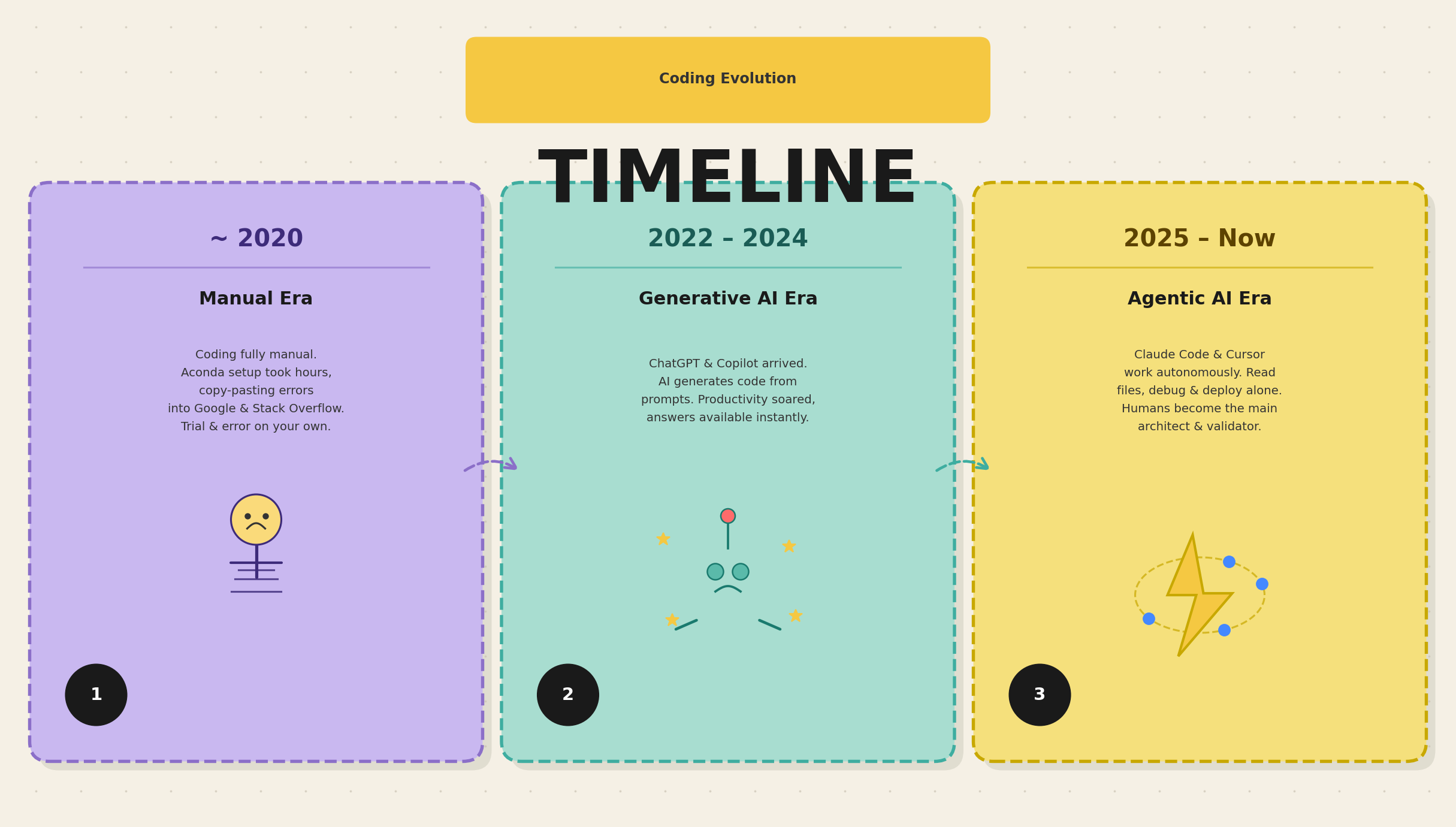
This time I want to share something I recently realized. Around 2020, I tried learning Python for the first time. I followed instructions from the internet, downloaded Anaconda, waited almost an hour for the installation, then faced a terminal full of error messages I did not understand at all. I tried again the next day, different errors. The following week, I gave up.
What’s interesting is that learning Python in 2026 looks nothing like that experience. Not because Python changed dramatically as a language, but because the ecosystem around it has changed drastically. Installation that’s now much more straightforward, an editor that’s far better integrated, and AI as a genuine learning assistant, those are the three biggest differences I’ve felt. Back then, when an error appeared, I had to copy-paste it into Google and hope someone had posted about the same problem. Now I ask AI directly, and the answers are contextual to the code I’m actually writing.
I’ve already prepared a Python fundamentals notebook you can work through step by step. It covers all the foundations: variables, loops, functions, data analysis libraries, all the way to ANOVA statistical tests for research data. But there are a few things it does not cover, because they simply were not relevant when it was written. This series is here to fill those gaps, not to repeat what is already there, but to complement it with what is relevant in 2026.
This series will continue with more posts ahead. Everything here builds on what has genuinely changed since 2020 and is directly relevant to day-to-day research work. I won’t lay out all the details now since some parts are still taking shape, but the direction is clear: toward more modern ways of working and, eventually, toward Python becoming a real part of a research data routine.
What feels most different to me is not about new features or more powerful tools, it is about having the confidence to start. Back then, one error was enough to make me stop. Now an error is the start of a productive conversation with AI. I am writing this series from the perspective of an oil palm agronomy researcher with no computer science background. If any part feels too technical or too brief for your context, write it in the comments.
Leave a Reply