
Authors: Sukarman, Lilik Sutiarso, Suwardi, Herry Wirianata, Andri Prima Nugroho, Septa Primananda, Muhdan Syarovy, Iput Pradiko, Nuzul Hijri Darlan | Year: 2024 | DOI: http://dx.doi.org/10.22302/iopri.jur.jpks.v32i1.270
In the depths of oil palm (Elaeis guineensis) plantations in Sumatra, a crucial difference lies hidden that determines the fate of the root system: a hardpan layer beneath Spodosol that blocks water flow like a wall, and Ultisol that allows water to pass through so freely that the dry season is immediately felt at the root tips. These two soil types dominate millions of hectares of oil palm land in Sumatra and Kalimantan, but they treat water very differently. This study aims to map water behavior in both soil types in a measurable way, so that irrigation and drainage strategies can be adjusted to the actual condition of the plantation.
The research team installed a Soil Moisture Content Monitoring System (SMCMS), a sensor-based monitoring system, at several soil depths in the research plot representing Spodosol and Ultisol conditions. Soil moisture data was recorded continuously over a period that included the rainy and dry seasons. In addition, the research team also measured the rate of infiltration, field capacity, and permanent wilting point to understand the range of water available to plants.
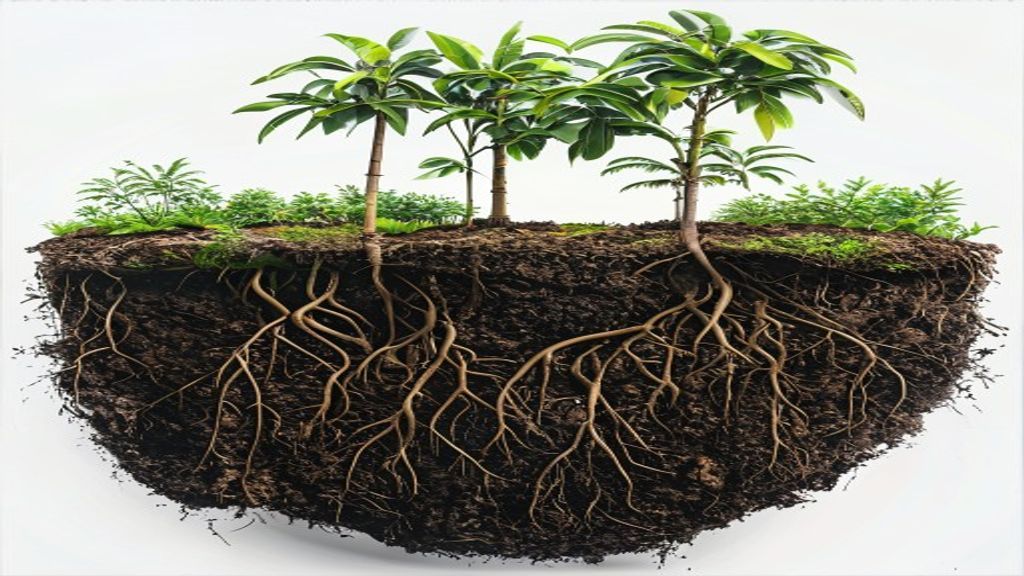
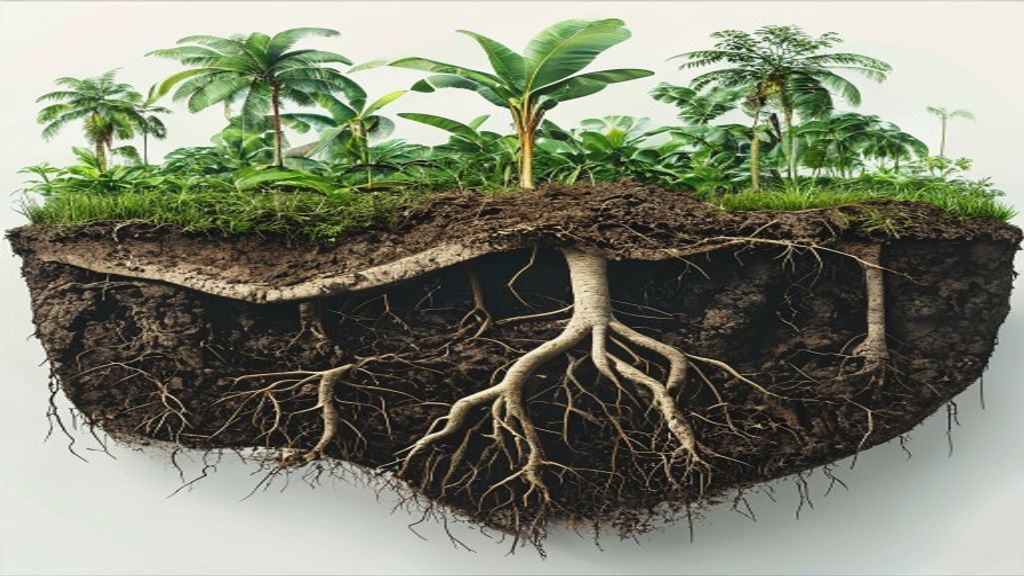
The results are clear. In Spodosol, the hardpan layer creates a barrier to vertical water movement, causing water accumulation in the upper layer during the rainy season, potentially leading to waterlogging conditions that harm the roots. On the other hand, during the dry season, the layer below the hardpan remains relatively moist but is inaccessible to the roots, which are limited to the upper layer. In Ultisol, water movement is freer, but its storage capacity is lower, causing plants to experience drought stress more quickly.
The following is a summary of the factors studied, their roles, and levels of influence.
| Factor | Role in Research | Condition / Context | Level of Influence | Specific Findings |
|---|---|---|---|---|
| Spodosol Soil | The primary soil type evaluated, characterized by a hardpan layer below the surface that hinders vertical drainage | Research plots in oil palm plantations representing Spodosol conditions, continuous moisture monitoring during rainy and dry seasons | Very High | Water accumulation in the top layer during the rainy season can cause waterlogging that damages roots. During the dry season, water in the lower hardpan layer is inaccessible to roots limited to the top layer, a detrimental double effect in both seasons |
| Hardpan Layer (Padas) | A natural physical barrier to vertical water movement, a distinguishing characteristic of Spodosol | Natural hardpan layer in the Spodosol profile at the research plots, limiting water movement downward and root access downward | Very High | A detrimental double effect: during the rainy season, it blocks drainage downward, causing water to accumulate in the top layer; during the dry season, it blocks root access to the still-moist lower layer |
| Ultisol Soil | A comparative soil type with low cation exchange capacity and without a hardpan barrier | Parallel research plots representing Ultisol conditions, monitoring with SMCMS sensors at several depths during the same period | Significant | Water movement is more free without the hardpan barrier, but water storage capacity is lower. Plants in Ultisol experience drought stress more quickly when rainfall decreases compared to Spodosol |
| SMCMS | Soil Moisture Content Monitoring System, a sensor-based system for continuously measuring soil moisture dynamics | Installed at several soil depths in both plot types, recording moisture data throughout the rainy and dry seasons | Limited | Allows for the identification of vertical water distribution patterns that cannot be detected with conventional methods. Data can be integrated into precision agriculture platforms for real-time irrigation recommendations |
| Available Water Capacity | A key parameter reflecting the range of moisture between field capacity and permanent wilting point, determining the water that can be utilized by plants | Determined through measurements of field capacity and permanent wilting point in both soil types at the research plots | Significant | The difference in available water capacity between Spodosol and Ultisol forms the basis for different management recommendations. Uniform irrigation strategies are not effective for both soil types due to their opposing water retention characteristics |
These findings have direct implications for the design of drainage and irrigation systems in plantations. Spodosol requires an active drainage system to prevent waterlogging, while Ultisol requires more stringent moisture monitoring to detect drought stress earlier. SMCMS data has the potential to be integrated into precision agriculture platforms for real-time, data-based irrigation recommendations, transforming a reactive approach into preventive action before plants experience stress.
Do you have questions about this research or similar experiences in your garden? Write in the comments column, we’re happy to discuss.
Glossary
- Soil Moisture
- The amount of water stored in the soil. The 0-30 cm layer is the active root zone of the oil palm, where the tree absorbs most of the water that is then evaporated through the leaves.
- Spodosol Soil
- A type of soil with a lower layer rich in iron, aluminum, and accumulated organic matter. It usually has a hardpan layer that hinders drainage and root growth downward.
- Ultisol Soil
- A type of soil with low cation exchange capacity and relatively limited nutrient content. Water movement is more free compared to Spodosol, but its water storage capacity is lower, making plants more prone to drought.
- Hardpan (Hard Layer)
- A dense and hard soil layer that is difficult for water and plant roots to penetrate. In Spodosol, this layer blocks downward drainage during rain and prevents roots from accessing water in deeper layers during dry periods.
- Waterlogging (Flooding)
- A condition where the soil is excessively waterlogged, filling the soil pores with water and lacking oxygen. This is detrimental to oil palm roots as it hinders root respiration and accelerates root decay.
Leave a Reply